

Our Dogs' Stories
This is the blog I wrote in 2025 about Sparkles journey to TCS diagnosis.
Sparkles has always been difficult to live with but the last 6 months have been even more challenging to say the least. November 2024 Sparkles went lame on her right hind and so saw the vet. We decided to do full X rays and to spay her at the same time so we only had to knock her out the once. All X rays came back clear and the spay healed well so in January I visited a rehab vet who treated Sparkles a couple of times with acupuncture, chiropractic and laser and she started to use the water treadmill. After 3 treatments the vet was not happy and suggested we needed further investigations and MRI.
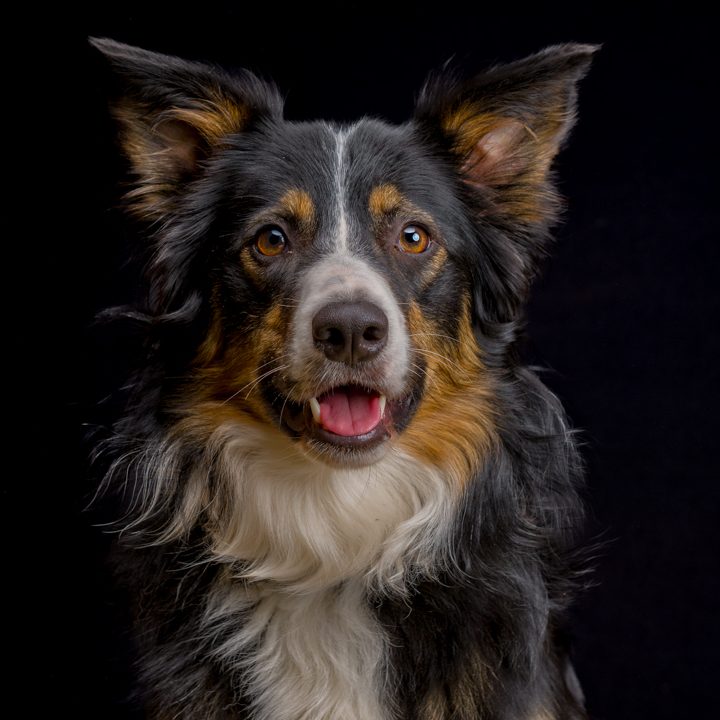
She suggested it could potentially be a condition called tethered cord. This shocked me as I had heard of this rare condition a few years ago when a friends spaniel was diagnosed but at that time he was only about the third dog in the country to have the diagnosis. As a side note Sparkles had been sound since those initial 2 days of lameness but was sore throughout her body. Many who saw her could see nothing wrong with her.
Sparkles was booked in for a dynamic MRI and also ultrasound to see if we could get a diagnosis and this is where even more complications started. Sparkles found it difficult to squat to go for a wee for a couple of days post MRI. The findings were also a bit muddled and I had different conversations with the vets than what was written on the reports so we weren't really any further forward. They said they couldn't see tethered cord but that she had a transitional vertabrae at the thoracolumbar junction and a hyper mobile lumbar sacral joint with a protruding disc when in extension. They said she would not be able to do sport and so I needed to try and get her comfortable as a pet dog. On the stance analyser she only put 9% of her weight through her left hind and the rehab vet always felt her tail was slightly to the left.
In the mean time I had been researching tethered cord. I had looked at scientific papers as well as joined a Facebook group for people with the condition as well as a separate one for dogs. It was info shared mostly in these group that helped me piece her case together. Links to papers are shared on the resources page for those who are interested in reading more.
I discovered in the human group there was a form of tethered cord that did not show on MRI and was referred to as Occult tethered cord. Parents spoke about a sacral dimple being visible on their children. Many also had issues with incontinence, UTI's as well as bowel issues such as constipation. There were also signs including nerve pain in legs and back with some toe walking.
Sparkles had always had a dip which I now could recognise as a sacral dimple. I had never palpated this before despite spending over 20 years in Animal chiropractic so knew it was not normal but did not know what it was. She kicked out with her hind legs which I assumed was nerve pain. She had done this intermittently since being a young pup. She then started to be incontinent at night after long journeys in the van and had developed a UTI which we couldn't clear up despite being cultured so using the appropriate antibiotics.
Many vets dismissed the sacral dimple as they hadn't seen it before. While a sacral dimple by itself is not necessarily something to be concerned about, when it is connected with other symptoms it is usually a sign of tethered cord or spina bifida. They also dismissed the kicking out of the hind legs as they never saw it and as one vet said she didn't have more severe neurological deficits. I found this response disappointing as didn't want to wait for her to progress to having more permanent damage if we could intervene sooner and prevent it. I already knew she was in pain.
Sparkles hair pattern had also changed over time. She naturally had straight hair but it initially started to stand up over her pelvis and gradually progressed up her back to lots of waves and flicks.
Sparkles has always been a 'difficult' dog. She couldn't lie down and settle in the day and was over reactive to life. In teaching her mat work she would yawn and show stress behaviours because lying down was uncomfortable. She had also been an aggressive puppy and we had a lead on her in the house from day one as she would run at you, bite and hang on. This was so much more than puppy biting. She didn't like being touched and handled, had span and tail chased when we brought her home. She took plaster off the walls in our house which I believe is also linked due to poor gut function. This was despite so much management being put in place. The barking was unbearable but I now see she was shouting for help as felt so bad. Her hair also changed and she developed hair patterns on her otherwise straight coat. The hair started to stand up over her pelvis and over time she also developed kinks all along her back showing underlying tension. Other signs were being sensitive to touch on some days and ducking away from touch along her back and not liking her front legs being touched. Her behaviour was extreme in all senses. She was a child genius and hugely talented but while her behaviour could be outstanding it could equally be horrendous. She counter surfed but this became a frantic seeking behaviour rather than just searching for crumbs or treasure. She spent her life on her back legs and I couldn't understand the findings of the disc protrusion when in extension because she always wanted to be in extension and not flexion which is why she didn't want to lie down. She could work around cars and dogs but when in pain would want to chase them and attack from hundreds of metres away even if she just heard them and couldn't even see them. On her worse days she was also getting a bit noise sensitive. All of these things went against her actual character. She is a very strong Border Collie but she actually likes dogs and can work in the presence of distractions when she is comfortable to do so.
Sparkles had always has a sensitive gut. I had had consults with nutritionists to help this and it had taken a while to help settle her gut. Interestingly post op her tummy is a lot better and her poo much healthier so I now suspect this was involved too and was a symptom I hadn't linked.
Due to what I was reading in the tethered cord groups I was sure this was what my dog had but many vets had looked at the MRI's and dismissed it. Eventually in my search I found a paper by a vet in the UK about Occult tethered cord. She had operated on a 5 month puppy due to incontinence. In the paper she discussed all the things I had questions about. The condition not showing on MRI, incontinence, sacral dimple, the intra and extradural operations. It spoke about the condition in both humans and dogs and linked to the people who I had found to be the go to people in the field for both humans and dogs.
I asked my vets to refer me and they did straight away. My own vets, despite not having heard of tethered cord, were extremely supportive. I have a lot of respect for them in admitting they hadn't come across the condition. Sparkles case was looked at by many vets but was dismissed due to them not seeing it in a specific way on the MRI. None of them mentioned Occult tethered cord or seemed interested in the symptoms after they had looked at the imaging. One referral centre who had operated on a couple of tethered cord cases even said they thought she was behavioural rather than having a physical condition. How kicking out of legs and incontinence could be behavioural I do not know but it showed me they were not the right people to see and I needed to keep looking. When I had a phone consult with the vet who eventually operated on Sparkles I finally knew I had found someone who understood the condition. She answered all my questions with full understanding and I decided to take Sparkles to her in Essex for an in person consult and exam and to proceed with surgery if appropriate.
Sparkles was operated on on 25th June 2025.
Sparkles
Beau had surgery for Occult tethered cord on 22nd April 2026. This is less than a year after Sparkles' surgery for the same condition. They presented differently hence writing this second blog about the condition. But without all the knowledge amassed from Sparkles we would likely never have come to this point.
Sparkles case was much more obvious and a more typical presentation of OTC.
Beau was considered to have milder symptoms which is why we hadn’t come to this conclusion sooner but here is his story to again help others who are struggling to piece together a diagnosis for their dog and to raise awareness in general.
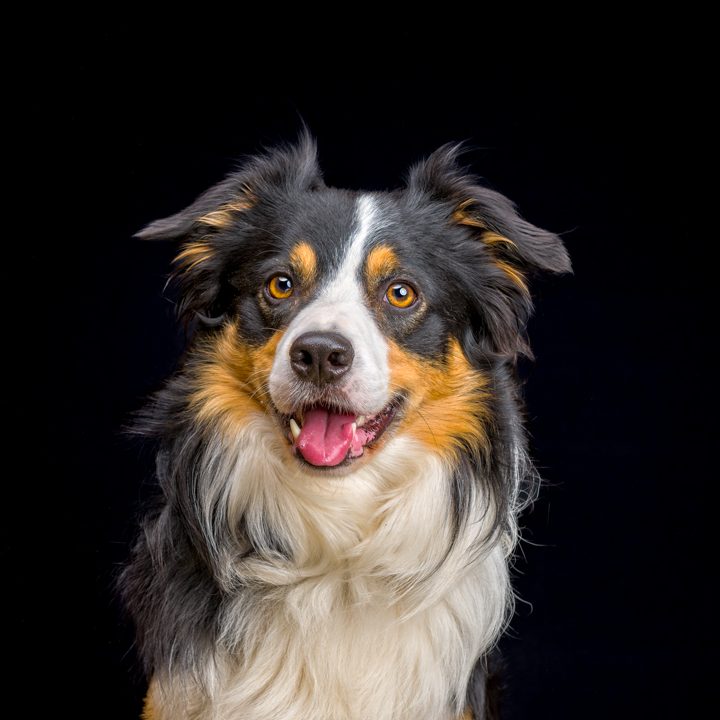
Much of the information I have collected around Beau’s case has been through speaking to numerous other people who have contacted me about their dogs after reading Sparkles blog so for that I am hugely grateful. So back to Beau.
Beau arrived with me at 8 weeks old with a poor gut. He had a sensitive tummy and it took quite a while to work out what worked best for him. Despite being toilet trained he took until he was 2 ½ years old to be able to consistently go through the night without having a poo. When he had a wee he never lifted his leg far off the ground and lifted it upwards but didn’t really rotate his body like my other boys do. He also did lots of small wees which I put down to him being an entire male but he never really stood and had a big proper wee.
Beau had Steroid Responsive Meningitis Arteritis at 12 weeks of age and was off his legs. Because of this and the poor gut I put down his random coat patterns down to this as he grew up.
Beau always had a weird posture when he lay down which again initially I put down to the issues he had been through and that he was weak as a puppy. We improved this a bit over time but never to the point of what I would call normal.
He was a sensitive dog and we did a lot of work to build his confidence around noise.
He never really liked having his quarters touched or brushed but I also just put this down to his sensitive nature.
By the time he was 18 months old I honestly thought I had a top class sport dog in the making. He loved his agility and was fast and fun to train. But he was a bit wild and so after 6 months I stopped competing with him to concentrate on his contacts as he fell off the dog walk a few times and struggled to stop on the end. I retrained this and after 6 months he was ready to go to a course running event. I didn’t see him have any slips or issues but from that moment on he couldn’t sit straight in his obedience training and started doing a sloppy/puppy sit. He had X rays, MRI and ultrasound and the only thing found was a tightness in the obturator muscle which pressed on the sciatic nerve. He was treated with shockwave and we rehabbed him so he ended up not competing that year.
Even when he came back from this injury I was never 100% pleased with his jumping style and he didn’t open his back legs as much as I would have expected. Despite this he progressed to G4 agility and Novice obedience.
An oddity I never linked was that he would regurgitate water sometimes. If he had a drink sometimes he would walk off and then all the water would come back out of his mouth a couple of seconds later. Last year in May 2025 he ran a course at an agility show. He was great and came third but when we had finished playing and took the toy off him to walk back to the car he suddenly started vomiting blood, a lot of blood. We rushed him to an emergency vet but by the time we got there he looked normal and they couldn’t find anything wrong with him. I spoke to my own vets the next day and we agreed the following week to check him out fully to try and get to the bottom of it. He was X rayed, scoped and scanned which showed nothing. On speaking to a friend who is a retired GP she speculated whether it could have been a Mallory Vice tear and when I looked this up in dogs it mentioned megasophagus which made me wonder if that was the issue with drinking water. Earlier this year a vet posted in the tethered cord FB group for dogs that their dog regurgitated water and so I asked if this was a potential symptom and someone else shared that in humans some do have problems swallowing.
Other issues were that he was always tight and twitchy in his back muscles. He found it physically hard to hold his head position for obedience. He started to place his head one inch to the left in the present consistently as couldn’t hold it straight. He also started to do more hopping and skipping steps behind.
In August 2025 he went to a 3 day obedience show. He went the best he had ever done on the first day and would have won the A class if he hadn't dropped the scent cloth. The next day he was really sore in his back. A couple of weeks later and he came out of an agility round lame on the right fore. This lameness went away and came back numerous times but I felt that it was coming from compensations in the back end as he was becoming more front end loading and he lost muscle on his left hind. He was also standing more upright when he had a poo.
He saw my rehab vet several times but wasn’t improving and so we went to the referral vets to see an ortho and neuro team. He had CTs of the front end and dynamic MRI behind. There was some disagreements as to whether he had elbow dysplasia, hip dysplasia or just soft tissue injury and so try him on pain meds and do 6 weeks rehab.
Sadly he came out of the MRI crippled from the positioning and we spent weeks with rehab trying to get him back to where he was before the investigations. In this time his body kept changing. As soon as one area loosened another tightened up. He shifted to a rolling gait and pacing, couldn’t trot a circle to the left. On the water treadmill he had to be supported or just fell to the left.
In January we saw Micheal Hamilton as a fresh set of eyes and to ultrasound scan him to see if anything could be pin pointed especially around the right shoulder and elbow. The front end was all clear but he did have a chronic psoas injury on the right hind which likely occurred with the MRI as he went in sound on that leg and came out not wanting to weight bare. So the next 6 weeks were spent treating the psoas. He was also put on methacarbanol at this time due to his muscle and fascia not responding to all the treatment he was having. This made a huge difference to him and was our first sign of positive change. His tummy appeared tighter rather than bulging in poor posture and suddenly he could walk unaided on the treadmill Previous NSAIDs and gabapentin had little effect.
Despite this we still couldn’t get him totally right. He had built up to 30 mins of off lead exercise but I couldn’t train him or walk him for longer as it created more issues. His hair patterns had also grown over his pelvis and the left hand side. He now could not trot properly over a low pole to do any pole work for rehab and consistently skipped when going over the door step or when moving off from toileting.
Another oddity is that occasionally he goes through stages of flapping his ears but doesn’t have any issues with them. Another thing seen in the tethered cord group by several people.
My rehab vet Tamsin O’Brien who first suspected tethered cord in Sparkles was also seeing similarities in Beau’s body to Sparkles and so I booked another online consult to chat through Beau’s case with Sparkles surgeon, Ane Uriate.
To operate or not was a huge decision. I had a dog that many would see on a walk and not recognise there was a problem. He is a happy soul in himself but his exercise and life is restricted hugely. He is my dog that lives for training. He always wants to be engaging with you and so I felt his life could be happier if he could return to some sort of training. He is also young enough still that if all goes well there is a small possibility we could return to sport. Tethered cord is a progressive disease so while I could have waited for him to deteriorate further if I can make his life even more fulfilled then we would both love that. This whole journey has had a cost mentally, emotionally and financially. Both Beau and Sparkles together have cost me now over £50 000 in the last 2 years but to keep Beau at the level he was at I would still be attending his rehab vet weekly for ever more.
The other issue is that Occult tethered cord doesn’t show on MRI. Occult meaning hidden. So opening him up was the only way to find out and putting your dog through any operation is a huge consideration. I was in the ‘lucky’ position of having previous experience in Sparkles to see a dog responding so well to the surgery but I am also aware of others that do not have the same positive results.
I decided it was worth the risk and we are now 3 days post surgery. He can so far lift his legs higher when he has a wee, stand still to do a bigger wee and is walking better over the doorstep with less skipping steps. It is early days and we have many more weeks before we will discover the full effect of the surgery but I am hoping the future looks brighter for my lovely sweet boy.
Finally I will try and answer some common questions about this condition.
Many have asked me if my 2 dogs are related and whether this condition is hereditary. Yes they are related but as yet there is no test available to test for this condition. The fact that it is showing up in dogs that are related as well as in human families would suggest there is a connection though.
Is tethered cord really rare?
Tethered cord has been added to the Merck Veterinary journal as a listed Congenital or hereditary condition so is starting to become more recognised. In my opinion it is under diagnosed rather than rare as many vets don’t even know about it yet.
I will write a future post about the rehab process as I know a lot of people also worry about this next stage too.
If you think your dog may have tethered cord then I would advise finding a neurologist familiar with the condition otherwise a lot of time and money can be wasted.
These are our dogs’ experiences. Every dog is different, and diagnosis, treatment and outcomes vary. Not every dog responds to surgery in the same way.